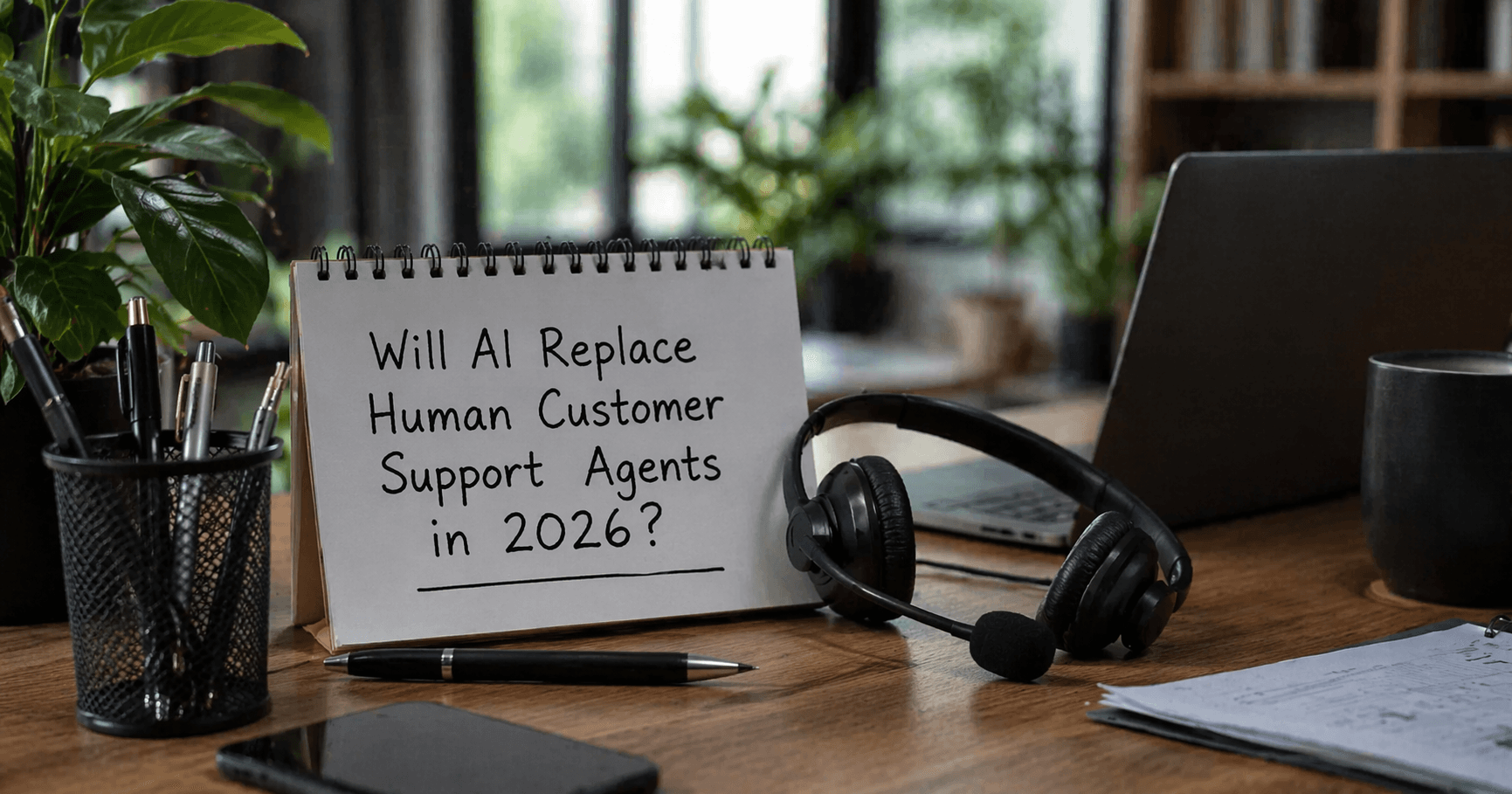

Will AI Replace Human Customer Support Agents in 2026?
AI is transforming customer support rapidly, but it will not fully replace human agents in 2026. Most companies are adopting a hybrid model where AI handles repetitive queries while humans manage complex, emotional, and high-value interactions. AI improves speed and efficiency, but human support remains essential for trust, empathy, and problem-solving.
What AI Customer Support Can Actually Do?
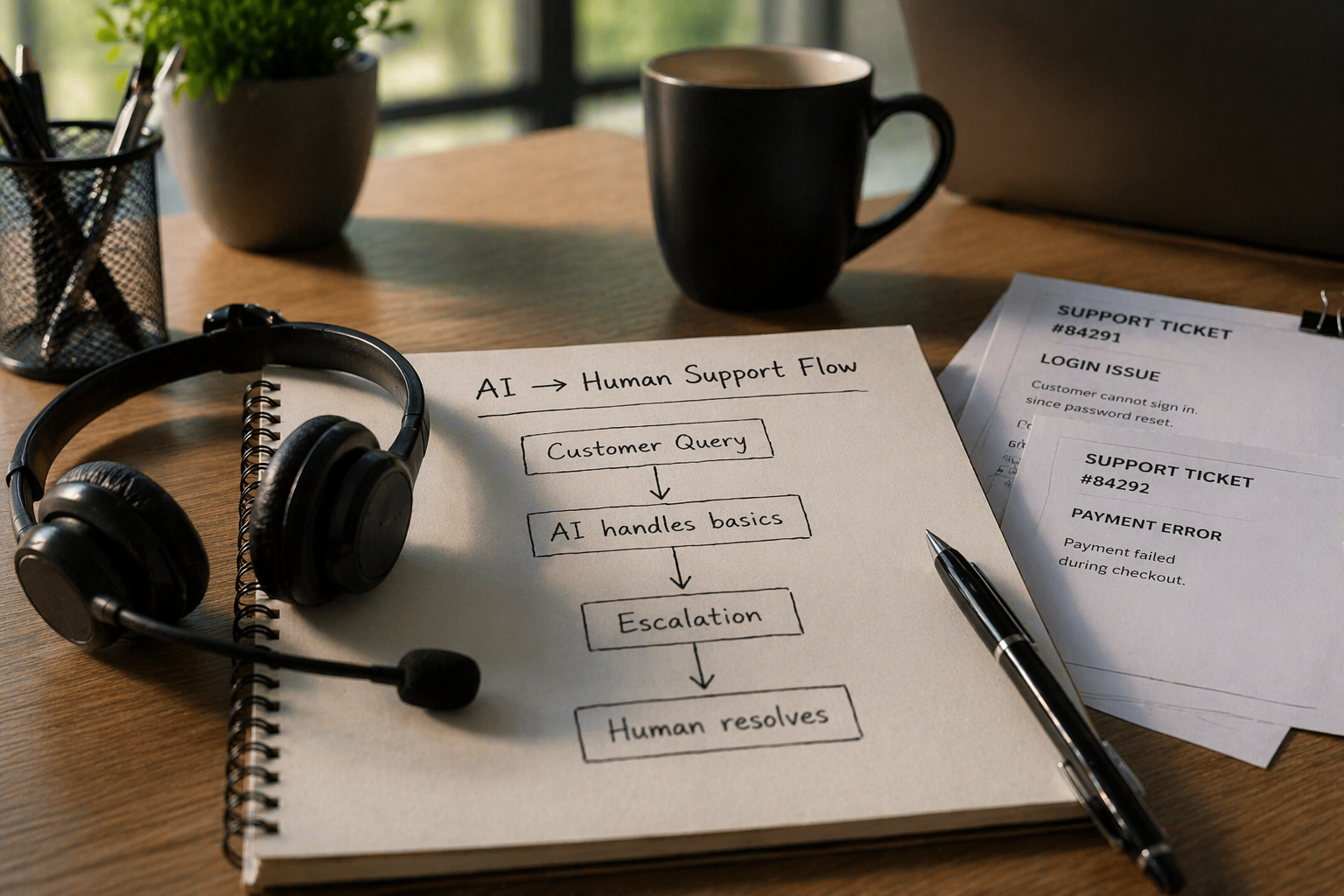
AI performs best when tasks are repetitive and predictable. That’s where support teams see the quickest gains. In these situations, AI can take care of:
Password resets and account access requests
Order tracking and basic customer queries
FAQ responses and simple troubleshooting
Ticket tagging, routing, and prioritization
Suggesting replies based on past interactions
Industry data suggests that around 30–50% of support tickets fall into this category, making them a strong fit for automation. When AI handles this layer of work, teams typically see:
Faster response times
Reduced ticket backlog
Less manual work for agents
Where AI Still Falls Short?
Support isn’t just about speed. Some situations need context, judgment, or emotional awareness areas where AI still struggles. These include:
Complex technical problems that require deeper analysis
Conversations where customers are frustrated or emotional
Requests that are unclear or lack context
Scenarios that require judgment rather than predefined logic
In these cases, customers expect a human who can understand the situation and respond accordingly.
The Role of Human Agents in 2026?
AI isn’t removing the need for human agents, it’s changing where they focus their time. Instead of repetitive tasks, agents now handle work that requires thinking, context, and empathy, such as:
Solving complex or multi-step issues
Managing sensitive or high-stakes conversations
Building trust and long-term customer relationships
Reviewing and improving AI-generated responses
At the same time, AI supports agents in the background by:
Suggesting replies in real time
Summarizing conversations
Recommending relevant solutions
This helps agents move faster without losing quality.
What Is Actually Changing?
The shift isn’t replacement it’s how the work is divided. In a typical AI-supported setup:
AI handles the first layer of interaction
Humans step in when deeper understanding is needed
Teams spend less time on repetitive tasks
Work becomes more structured and less reactive
AI systems also need regular monitoring, training, and updates to stay effective.
Frequently Asked Questions
Do small businesses benefit from AI customer support?
Yes, especially if they handle repetitive queries. It helps manage volume without needing to hire more agents.
Do customers prefer AI or human support?
Customers prefer quick AI responses for simple issues and human assistance for complex problems.
Is AI customer support reliable?
It is reliable for structured queries but still requires human oversight for accuracy.
What happens when AI cannot solve a problem?
The issue should be escalated to a human agent to ensure proper resolution.
Can AI handle customer support 24/7?
Yes, AI can provide round-the-clock responses, but human agents are still needed for complex or sensitive issues.
Related Posts

Key Help Desk Features For Finance Teams
Discover key help desk features for finance teams. Improve control, tracking, and compliance with the right setup while keeping workflows simple and efficient.

Why Help Desk Systems Fail After Implementation
Learn why help desk systems fail after implementation. Fix adoption issues, improve workflows, and track ROI to get better results from your support setup.